- Debrief - The undercover dispatch
- Posts
- Hired in 6 Minutes: the undercover investigation that reveals who ICE recruits
Hired in 6 Minutes: the undercover investigation that reveals who ICE recruits
When “wartime recruitment" reaches the point where the state no longer knows (or no longer wants to know) whom it is arming.

Sacha Biazzo
17 gennaio 2026
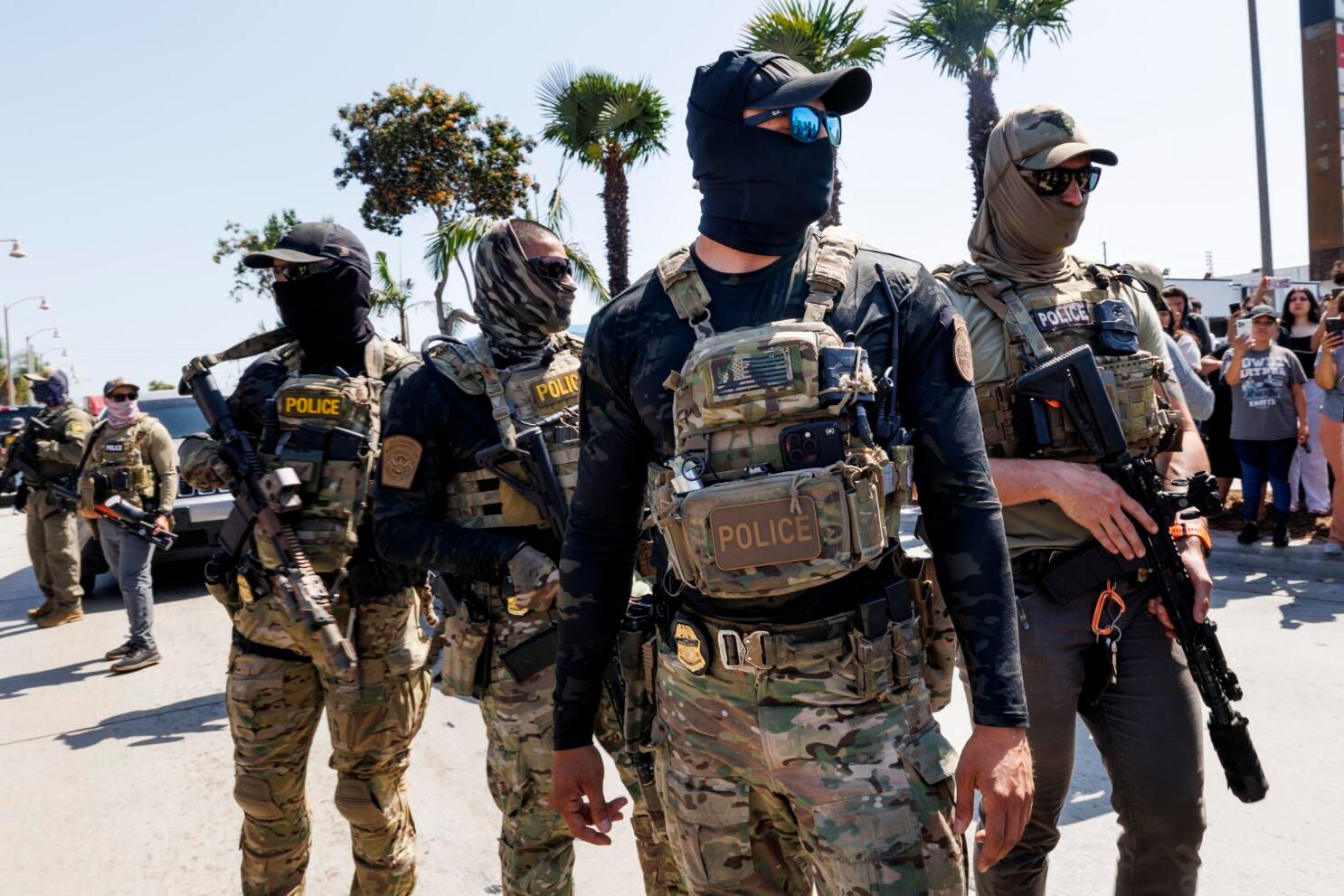
In the United States, ICE, the immigration enforcement agency, has returned to the front pages after a sequence of images that seem to come straight from a country at war. In Minneapolis, on January 7, 2026, a U.S. citizen, Renee Nicole Good (37), a mother of three, was killed by gunfire from an ICE agent. The Department of Homeland Security (DHS) described the incident as an “act of domestic terrorism,” claiming that Good had attempted to run over the agents. But analysis of the video appears to show a different dynamic: the car’s wheels were turned to the right, suggesting that the victim did not intend to strike the agent, who was positioned to the side of the vehicle.
The killing of Good, an activist who, according to several sources, was present as a legal observer during ICE raids, sparked protests across the country. The day after her death, two more civilians were wounded by gunfire from federal agents. Meanwhile, a second video circulated, also from Minneapolis, showing a woman, Aliya Rahman, being dragged from her car by agents in tactical gear while she says she is disabled and on her way to see a doctor. In the footage, one of the men is masked and smashes the window; others cut the seatbelt and forcibly pull her out.
These dramatic events are the result of an unprecedented tightening of the mass deportation policies pushed by Trump. That pressure has led to the arrest of more than 352,000 people; a similar number have been deported, and 32 people have died while in custody. Yet Trump remains far from the goal he has set himself: deporting one million people a year. To that end, he has decided to massively expand ICE’s workforce and operations.
It is in this climate that the story we tell today unfolds: an undercover operation that reveals how the immigration police recruitment campaign is being carried out—and who these masked men roaming the streets, armed and hunting immigrants, really are.
This issue of Debrief is written by Sacha and edited by Luigi.
In This Issue of Debrief:
The infiltration: “hired” in six minutes
Laura Jedeed is the kind of candidate you would expect to see at a job interview for one of ICE’s squads. She is 38 years old and a military veteran (82nd Airborne, two deployments to Afghanistan)—a background that clearly works in her favor. But she is also a journalist who is openly critical of Trump and explicitly anti-ICE, a fact that would be easy to discover with a simple Google search, since she does not hide her views.
In August 2025, she went to a job interview to be hired by ICE at a Career Expo—one of those fairs where agencies run recruitment drives. The venue was the Esports Stadium Arlington, in Texas. The interview lasted less than six minutes: basic questions (name, date of birth, military experience), with no real attempt to understand who was sitting in front of them. Since she had no prior experience in law enforcement, it seemed unlikely she would be hired. When she told one of the agents present that she would even be willing to take an administrative position, the agent replied: “The goal is to put as many guns and badges on the street as possible.”
On September 3, 2025, a surprise email arrived: a “tentative offer,” a job offer complete with access to the government portal and a series of forms to fill out, authorizations for background checks, and declarations (including questions about any past convictions for domestic violence). Jedeed did nothing. She did not complete the required steps, did not submit the requested documents, did not cooperate with the onboarding process. Yet three weeks later she received another message thanking her for “continuing” the hiring process and inviting her to schedule a drug test. She decided to go ahead, to see just how far the absurdity would go. Moreover, she was living in New York State, where marijuana is legal, and she had smoked a few days earlier—so she fully expected not to pass the test.
When she logged back into the hiring portal days later, she was shocked: the system showed that she had passed the final stage and had been hired, with the status “Entered on Duty” (essentially as if she had already started work).
It was at that point that Jedeed declined the position and published the entire surreal episode in Slate, posing a simple question: if they didn’t see, or didn’t bother to check, that I was an anti-ICE journalist, and if I hadn’t filled out a single form required for hiring, what else are they “missing” in the recruitment process for the tens of thousands of new immigration agents to whom they are handing weapons and power?
Who are these masked men?
The Jedeed case is a real-world demonstration of the distortions a system under political and numerical pressure can produce. In the legislative package nicknamed the “One Big Beautiful Bill,” Trump last year allocated roughly $45 billion to detention centers and $32 billion to immigration enforcement—fueling a race to hire new immigration agents “fast.”
According to an internal document seen by The Washington Post, ICE launched a massive recruitment campaign costing around $100 million. It was described as “wartime recruitment” aimed at gun enthusiasts, people from military milieus, and the “tactical lifestyle” crowd, rolled out near military bases, at sporting events, and at job fairs.
DHS and ICE said they received more than 220,000 applications in a matter of months and issued over 18,000 tentative job offers, dangling a bonus of up to $50,000 for anyone who simply signed the offer.
The undercover reporter wrote that her first-hand experience suggests ICE is effectively “making it up as it goes” in recruitment, and that it’s natural to ask uncomfortable questions: “How many people convicted of domestic abuse are being handed a gun and a badge and authorized to enter other people’s homes? How many people with ties to white-supremacist organizations are targeting minorities on principle, regardless of immigration status?” The ICE recruitment drive seems “so slapdash,” she writes in Slate, that “the administration effectively has no idea who is joining the agency’s ranks.” Which means that “we are all, collectively, in the dark about whom the state is arming, entrusting with the most sensitive police powers, and sending out onto America’s streets.”
According to two law-enforcement officials quoted by NBC, ICE used an automated résumé-screening algorithm to split applicants into two tracks: those with prior policing experience (sent to a shortened course) and those without (sent to the full training). Anyone who had served as an officer could be routed into a four-week online program, while everyone else was supposed to complete an eight-week, in-person intensive course. (Worth noting: until a few years ago, standard ICE training lasted twenty weeks, but it was drastically shortened under the Trump administration to “eliminate redundancies” and speed up timelines.)
The basic idea, then, was to streamline hiring by leaning on AI, except the software turned out to be remarkably blunt. It took the mere presence of the word “officer” in résumés at face value, classifying applicants as former officers even when they were not, for instance “compliance officers” (administrative staff) or candidates who wrote that they aspired to become ICE officers. The result: many applicants with no real experience were mistakenly placed in the short program, effectively skipping the more thorough training they should have received. In short: another crack in the system.
Reactions: denials, accusations, and counter-narratives
DHS dismissed the story as “such a lazy lie,” arguing that Jedeed was never truly “offered” a job, but merely received a preliminary letter, something many applicants get at an early stage. She responded by publishing a screen-recording of the portal that, she says, shows the process at an advanced stage (all the way to a final offer and an onboarding date).
The investigation landed in an already intensely polarized moment. In Minneapolis, Mayor Jacob Frey forcefully challenged the “self-defense” narrative and called on ICE to leave the city, while the Trump administration further escalated its rhetoric, going so far as to invoke the Insurrection Act in connection with the protests.
A segment of public opinion—and several Democratic figures—began connecting the dots: indiscriminate, fast-track recruitment campaigns and the rise in street-level violence involving ICE agents may be tightly linked.
After the lightning-fast “hiring” of an undercover journalist into an armed apparatus, the core question is no longer “what is ICE doing”, that is plain to see, but “what is ICE today,” after recruiting tens of thousands of agents in such a rough-and-ready way, with no apparent control mechanisms—not even the most basic one: a Google search.
Until the next Debrief,
Luigi and Sacha
Wall Street Isn’t Warning You, But This Chart Might

Vanguard just projected public markets may return only 5% annually over the next decade. In a 2024 report, Goldman Sachs forecasted the S&P 500 may return just 3% annually for the same time frame—stats that put current valuations in the 7th percentile of history.
Translation? The gains we’ve seen over the past few years might not continue for quite a while.
Meanwhile, another asset class—almost entirely uncorrelated to the S&P 500 historically—has overall outpaced it for decades (1995-2024), according to Masterworks data.
Masterworks lets everyday investors invest in shares of multimillion-dollar artworks by legends like Banksy, Basquiat, and Picasso.
And they’re not just buying. They’re exiting—with net annualized returns like 17.6%, 17.8%, and 21.5% among their 23 sales.*
Wall Street won’t talk about this. But the wealthy already are. Shares in new offerings can sell quickly but…
*Past performance is not indicative of future returns. Important Reg A disclosures: masterworks.com/cd.
If you've come across an undercover investigation you think we should feature, share it with us here:
👉 https://forms.gle/1JbqMBJUfoRU9MBp7
If you have suggestions, questions, tips (or insults), drop us a line at:
👉 [email protected]
If you enjoyed this newsletter, pass it along to your friends using this link:
👉 https://debrief-newsletter.beehiiv.com/
Follow us on Instagram, occasionally we'll upload content different from the newsletter:
👉 https://www.instagram.com/debrief_undercover/
We've also launched a podcast featuring interviews with the authors of memorable undercover investigations:
👉 https://open.spotify.com/show
And if that's still not enough, join our Telegram channel, where we can keep the conversation going:
👉 https://t.me/debrief_undercover
Reply