- Debrief - The undercover dispatch
- Posts
- Last Month Undercover: On the Trails of Today’s Slave Traders
Last Month Undercover: On the Trails of Today’s Slave Traders
From Dubai to Kenya to the English Channel, three investigations expose the international networks of human exploitation.

Sacha Biazzo
26 settembre 2025

In the past month, three undercover reports have taken us deep into criminal systems that prey on the most vulnerable, spanning borders and continents. From young women lured in Uganda and trapped in degrading sex parties in Dubai, to children recruited along Kenya’s trucking routes, to migrants ferried illegally across the Channel—different stories, but bound by the same thread: they unmask the new slave traders of our time, those who profit from human bodies and human hopes in moments of desperation.
If these stories resonate with you, next week, September 24–28, the DIG 2025 International Investigative Journalism Festival will take place in Modena, Italy. Among the many highlights, there will be a showcase of investigative films on Gaza. And of course, we’ll be there talking about undercover reporting with some outstanding colleagues.
This issue is written by Sacha and edited by Luigi.
In This Issue of Debrief:
Behind the Dubai Porta Potty: The Trafficking of Ugandan Women
A 23-year-old Ugandan woman falls from the balcony of a Dubai skyscraper. The video of her death goes viral, tied to the grotesque online trend known as “Dubai Porta Potty”—secret parties among the Gulf elite where foreign models are said to endure unimaginable abuse. Starting from that mystery, Runako Celina, a reporter with BBC Africa Eye, launched an investigation that uncovered an even darker reality behind the viral hashtag.
Her documentary, Death in Dubai, retraces the lives of Monic Kurunji (23) and Kayla Bunji (21), two young Ugandans who, in 2021 and 2022, plunged to their deaths from high-rise buildings in Dubai’s Al Barsha district under suspicious circumstances. Local authorities dismissed the cases as suicides brought on by alcohol or drug use. But the BBC team dismantled that version: witnesses reported a struggle on Monic’s balcony before her fall, and independent toxicology tests later disproved the claim that Kayla had drugs in her system.

Investigative journalist Runako Celina (BBC Africa Eye) uncovered the networks of complicity behind the so-called “Dubai Porta Potty” phenomenon, linked to the suspicious deaths of two young Ugandan women in the city.
The central question was: who brought these young women to Dubai, and why?
BBC Africa Eye uncovered the existence of a transnational human trafficking network operating between Uganda and the United Arab Emirates. In Uganda, the recruiter was Umar “Bash” Bashir, who scoured social media for vulnerable young women—unemployed, poor, or under family pressure—promising them respectable jobs in Dubai as cashiers or hotel staff. Bashir arranged their travel, securing documents and visas often through fraud. Evidence later showed he had illicit access to Uganda’s national ID registry (NIRA), allowing him to retrieve or falsify official records at will.
Once in the Emirates, the women were handed over to an accomplice, Charles Mwesigwa, known as “Abbey.” A former bus driver who had relocated to Dubai, Abbey managed as many as fifty women at a time, shuffling them between apartments to keep them out of sight.
On arrival, the promised jobs evaporated. Instead, the women were told they owed a crushing “debt”—between $2,800 and $5,600—to cover travel, visas, and housing. That debt turned them into captives: stripped of documents and freedom of movement, they were forced into prostitution and subjected to violent, degrading acts, the very ones whispered about in the grotesque “Porta Potty” stories.
The BBC documentary dismantles the official narrative of “tragic accidents” and exposes an organized criminal system hiding behind Dubai’s glittering façade—one that lures young African women into a deadly trap. For Monic’s family, who once believed her death was suicide, the revelations now provide grounds to demand justice and push for the case to be reopened.
Behind the spectacle of luxury and viral scandal, the investigation makes clear, lies no urban legend but the systematic trafficking of real women, managed in the shadows.
“They're still children”: the madam racket in Kenya
In Kenya, horror runs rampant along the busy truck routes. About 50 km from Nairobi lies Maai Mahiu, a transit town crossed daily by trucks headed for Uganda, Rwanda, South Sudan, and DR Congo. Maai Mahiu is notorious for its thriving sex trade, and a BBC Africa Eye investigation has revealed its most chilling aspect: girls aged 13-15 sold to truck drivers by local women known as “madams.” Two undercover reporters—pretending to be prostitutes interested in “learning the trade” of madam—infiltrated this network, spending months inside it. Hidden cameras captured shocking evidence: the madams meet the investigators believing them to be aspiring exploiters and, while admitting to doing something illegal, go so far as to offer them underage girls to initiate into prostitution.
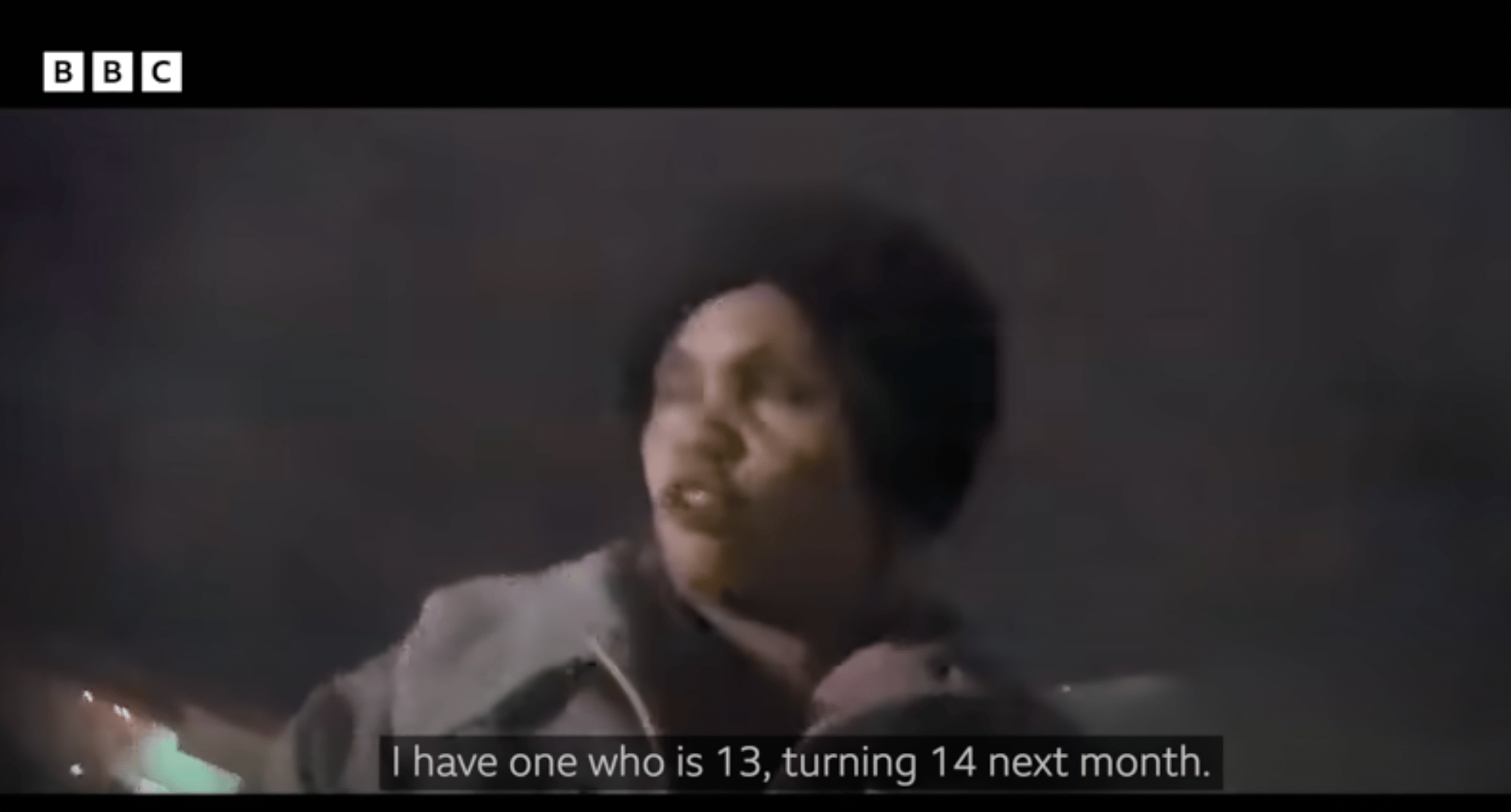
The town of Maai Mahiu, Kenya, is a trafficking hub where so-called madams—local women—offer girls as young as thirteen to passing truck drivers. In the BBC Africa Eye investigation, two female reporters infiltrated the network, posing as would-be traffickers looking for business.
In one filmed case, a madam who calls herself Nyambura proudly introduces reporters to a 13-year-old girl who has been “working” for her for six months. Nyambura is filmed laughing and explaining how easy it is to procure these young victims: "They are still children, so it's easy to manipulate them just by giving them sweets. [...] In Maai Mahiu, it's normal," she says, describing child prostitution as a lucrative business fueled by passing truck drivers. In another scene, the same madam accompanies the undercover reporter to a secluded house, where three frightened teenagers are sitting on the sofa. As soon as Nyambura leaves, the girls take the opportunity to confide in each other: they say they are abused every day, several times a day, forced into “unimaginable” practices by clients. One of them has the face of a child but speaks in a dull voice about what she is forced to endure.
A second undercover investigator managed to gain the trust of another trafficker, a woman who called herself Cheptoo. Unaware she was being recorded, she admitted matter-of-factly that “selling girls” allowed her to live comfortably. She added that she operated “in deep secrecy” because she knew it was illegal—but that there were regular clients willing to pay for minors.
All of the evidence gathered by the BBC—from filmed negotiations to encounters with the victims—was handed over to Kenyan authorities back in March. Yet no arrests have been made. Local police claimed they were unable to track down the women or the girls seen in the footage, and in truth many of the victims are far too afraid to come forward.
The investigation shines a light on an entrenched system of child prostitution, sustained by poverty and silence. Along Kenya’s trucking routes, the abuse of minors has become almost “normal”—an open secret tolerated until undercover journalists documented it for the world to see. Now, those complicit laughs and the testimonies of exploited children can no longer be ignored.
“It’s Just Another Job”: A Year Inside the Channel Smuggling Gangs
Finally, we move to the English Channel, between France and the UK, where the lucrative business of migrant smuggling thrives. A BBC investigation, aired in August, exposed the inner workings of a powerful criminal network running clandestine crossings from the French coast to England.
For more than a year, British reporters worked undercover, posing as migrants desperate to secure passage. They managed to infiltrate one of the most organized gangs operating along the Franco-British corridor. With hidden cameras, they documented from the inside how the smugglers’ operations really work: from the coastal “jungles” where migrants wait for their chance, to the nighttime launches of overcrowded dinghies bound for England.
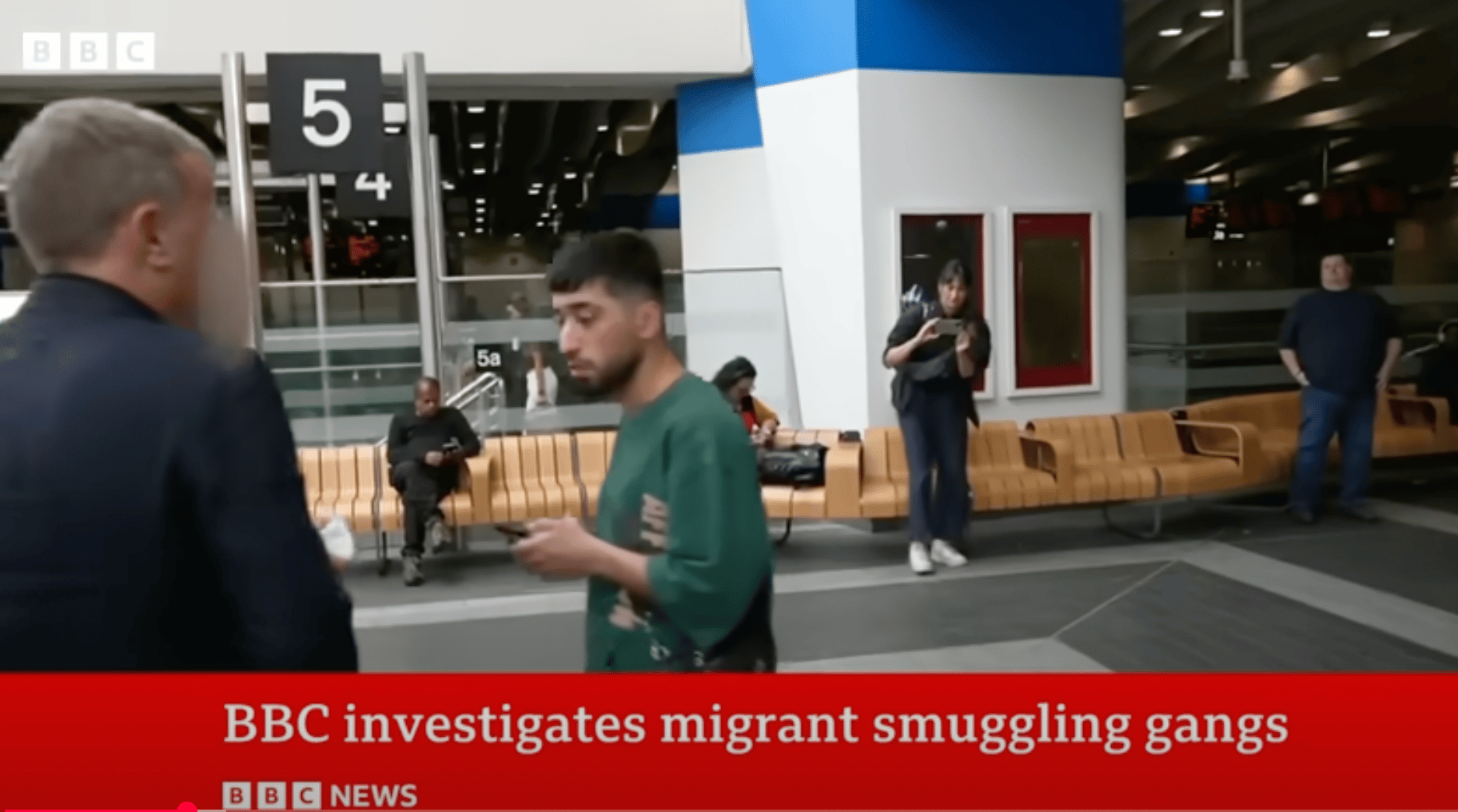
A BBC reporter’s hidden camera captured a scene inside a makeshift camp in the forests near Dunkirk, France—a hub where many of the Channel’s illegal crossings are staged by smuggling gangs.
The investigation pinpointed a hidden camp deep in the forests outside Dunkirk, just a few miles from the Belgian border. Here, among camouflaged tents and muddy trails, hundreds of people wait for the smugglers’ call, while rival gangs clash with guns and knives for control of the territory. When the weather allows, the operation begins: groups of around fifty migrants are rounded up, loaded into vans, and driven to remote beaches. In the darkness, within minutes, smugglers inflate dinghies hidden among the reeds, cram as many people aboard as possible, and push them out to sea before patrols arrive.
On the other side of the Channel, in the UK, accomplices are ready to receive these “ghost landings.” BBC journalists filmed gang members in Birmingham, collecting envelopes of cash from migrants who had just made the journey—payment for their passage. The whole system runs with near-military precision. The network is divided into autonomous but coordinated cells: some recruit migrants, others supply and steer the boats, others drive the vans or handle the money. It’s a well-oiled mechanism that constantly outpaces law enforcement.
What is a million-dollar business for criminals is, for migrants, a desperate voyage often without return. According to estimates cited in the investigation, about 80 people die each year trying to cross the Channel on small boats—among them, a dozen children. Despite government pledges to dismantle the smuggling rings through Franco-British agreements, on the ground the gangs play cat-and-mouse with police, shifting tactics constantly. One smuggler, interviewed anonymously by Sky News, put it bluntly: “We don’t see it as smuggling. We see it as another job, like working in a restaurant or as a barber. Our job is to move people across the Channel.”
For these merchants of people, transporting migrants across borders is just another trade—one that feeds on despair and delivers profit at the cost of human lives. The BBC’s undercover investigation exposed this brutal reality from the inside, reminding us how complex (and urgent) the fight is to break the chains of today’s slave traders.
If we don’t see you at DIG, we’ll see you in the next Debrief.
Luigi & Sacha
If you've come across an undercover investigation you think we should feature, share it with us here:
👉 https://forms.gle/1JbqMBJUfoRU9MBp7
If you have suggestions, questions, tips (or insults), drop us a line at:
👉 [email protected]
If you enjoyed this newsletter, pass it along to your friends using this link:
👉 https://debrief-newsletter.beehiiv.com/
Follow us on Instagram, occasionally we'll upload content different from the newsletter:
👉 https://www.instagram.com/debrief_undercover/
We've also launched a podcast featuring interviews with the authors of memorable undercover investigations:
👉 https://open.spotify.com/show
And if that's still not enough, join our Telegram channel, where we can keep the conversation going:
👉 https://t.me/debrief_undercover
Reply