- Debrief - The undercover dispatch
- Posts
- Paid by Moscow to rig the elections: undercover inside Russia’s propaganda lab
Paid by Moscow to rig the elections: undercover inside Russia’s propaganda lab
How a pro-Russian network trained young Moldovans to spread fake news, and was exposed by two undercover investigations.

Luigi Scarano
17 ottobre 2025
Russia’s goal was to taint Moldova’s parliamentary election on September 28, discredit the country’s path toward European integration, and bring it back under Moscow’s influence, all without leaving any trace. And that’s exactly what would have happened if two undercover investigations hadn’t exposed a propaganda and election-manipulation network directly funded by Russia.
This story isn’t an isolated case, and it doesn’t concern only a country that rarely finds space in international media coverage. It vividly shows how the machinery of political propaganda operates today, how it follows a kind of “interference manual,” made up of secret Telegram channels, manipulated TikTok accounts, fake polls, and paid influencers. It’s worth talking about, because what happened a few weeks ago in Chișinău could just as easily happen somewhere else tomorrow, perhaps much closer to home.
This issue is written by Luigi and edited by Sacha.
In This Issue of Debrief:
The Moldovan Disinformation Factory
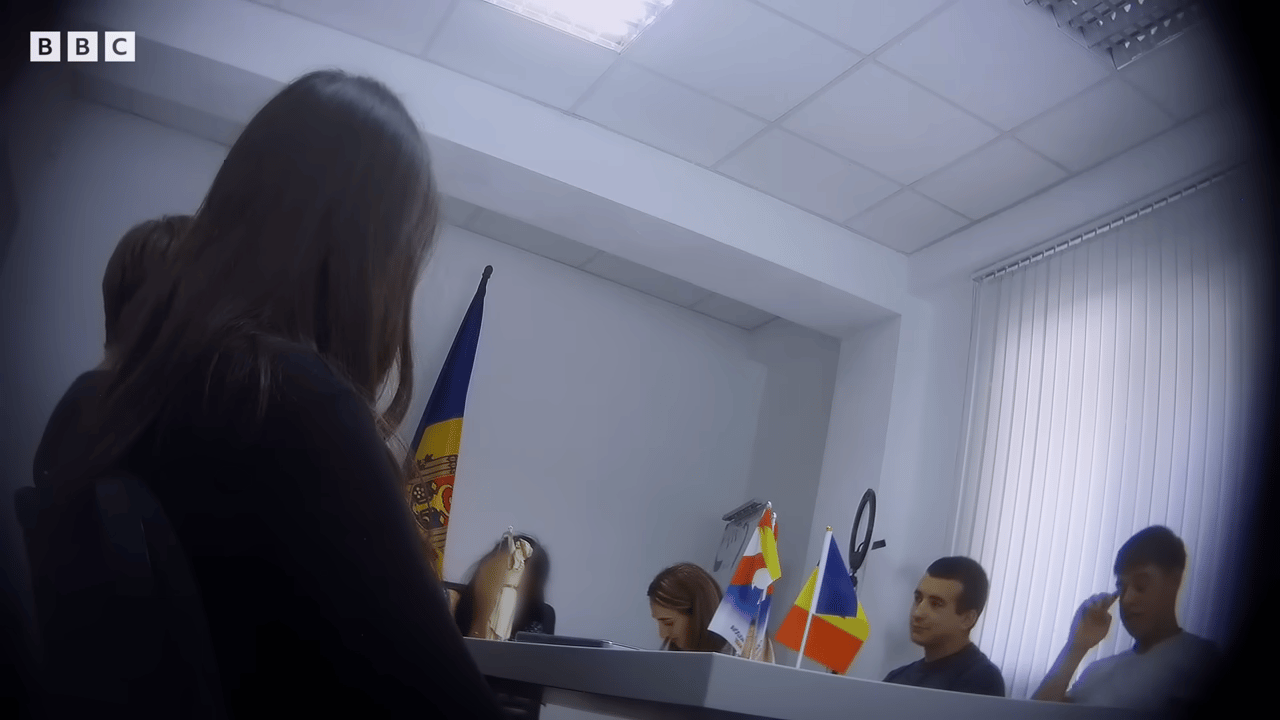
It all starts with a Telegram message: an invitation to take a series of aptitude tests. Once you passed, you gained access to a mysterious private group called “Electoral Hackathon,” where participants could attend a series of secret online courses to be trained as “operatives.” One of the webinars, tellingly titled "How to go from your kitchen to national leader", served both as training and as a filter to select the most motivated participants, who could earn up to 3,000 lei (about 200 euros, 170 dollars) per month for their work.
One of the group’s operational meetings | BBC
That’s how an undercover journalist from BBC Eye, the investigative unit of the UK public broadcaster operating on a global scale, along with other young Moldovans, took part in this course. Coordinators taught recruits how to create fake websites, social profiles, and posts, also leveraging Artificial Intelligence tools to quickly generate texts and images. Aspiring influencers had to start by publishing generic “patriotic” content, then gradually move on to false political messages. As the weeks went by, the instructions took on an increasingly pro-Russian and anti-government tone: group members received lists of baseless accusations and toxic narratives to spread, including the idea that the government had a plan to rig the elections, that Moldova’s possible entry into the EU would force citizens to “join the LGBT community,” or even that presidential candidate Maia Sandu was involved in child trafficking.
The person who contacted the reporter directly and instructed her in these practices was Alina Juc, who presented herself as the group’s project manager. Reporters discovered that Juc is originally from the separatist region of Transnistria and strongly tied to Russia, the country from which the steady flow of money needed to fund the operation was said to be coming. The journalist, who worked side by side with Juc for weeks, managed to record the organizer on the phone requesting that funds be sent from Moscow to pay the team of activists. The payment was to be made via the Russian bank Promsvyazbank (PSB), a state institution already sanctioned by the West and known as the bank of the Russian Ministry of Defense.
After penetrating the system, BBC journalists managed to map part of the digital ecosystem created by the pro-Russians. They identified at least 90 TikTok accounts which, since the beginning of 2025, have posted thousands of videos, totaling over 23 million views and 860,000 “likes”, impressive numbers for a country of just 2.4 million inhabitants. The BBC also traced the financial leadership of the operation, finding evidence of a direct connection to a Moldovan oligarch named Ilan Shor. Shor, already the leader of a pro-Russian populist party, had fled to Russia after being convicted at home for a massive banking fraud; in 2022–2023 he emerged as the main orchestrator of anti-government protests and attempts at destabilization in Moldova. The network infiltrated by the BBC turned out to be affiliated with the NGO “Eurasia,” an organization theoretically non-profit but used by Shor as an operational arm: it had already been sanctioned by the EU, the US, and the UK for buying votes against the pro-EU referendum in 2024.
Twice Undercover in the Belly of Propaganda
In parallel with the BBC’s work, Moldova’s own investigative press was also going undercover. Journalist Natalia Zaharescu from the weekly Ziarul de Gardă (ZdG) was carrying out an independent investigation that, remarkably, led her to infiltrate the very same clandestine pro-Russian propaganda network. In 2024, Zaharescu and her colleague Măriuța Nistor went undercover for three months inside Ilan Shor’s organization, posing as activists within his movement. That investigation, titled În slujba Moscovei (“In the Service of Moscow”), documented the vote-buying and illicit mobilization systems deployed during the 2024 presidential elections and the referendum on European integration. It earned the two reporters the prestigious 2025 European Investigative Journalism Award.

Natalia Zaharescu during the investigation | Ziarul de Gardă
But the story didn’t end there. After their investigation was published, Natalia’s cover wasn’t immediately blown by the pro-Russian group. Just days after the election, “Irina Zahar”, their undercover alias, was contacted again by the coordinators, unaware of her true identity, to thank her for her work and invite her to join a new online disinformation “team” being formed. Zaharescu seized the opportunity and decided to continue the investigation. In early 2025, Irina Zahar was added to a new secret Telegram group dedicated to pro-Kremlin information warfare. Inside, she found around fifty recruited “digital activists” receiving intensive training similar to that observed by the BBC. Participants were taught how to mask their online identities, how to outsmart social media algorithms, and how to insert hidden political messages into seemingly harmless cultural content.
During this second infiltration, Zaharescu was able to confirm many of the findings also uncovered by the BBC, starting with the Moscow funding. Within the group, Irina was invited to join a smaller elite cell called “InfoLeader,” reserved for the most skilled members, which included monetary compensation. However, when it came time to arrange payments, Irina Zahar’s cover was blown. The coordinators asked for her personal information and a Promsvyazbank (PSB) account reference to send her the money, but Natalia provided the same fake details she had used in her previous operation, enough to arouse suspicion. Cross-checks revealed the true identity of the “activist.” By then, however, most of the information had already been collected. In September 2025, shortly before the elections, Ziarul de Gardă published the new investigation titled The Kremlin’s Digital Army, which confirmed in detail the existence of a hybrid Russian-Moldovan propaganda network ready to sabotage the vote.
How Undercover Journalism “Saved” a Democracy Under Attack
The combined revelations obtained undercover by the BBC and Ziarul de Gardă had an explosive impact on Moldova’s political scene, not only in the media, but also at the institutional level. In the days following publication, authorities accelerated ongoing operations to counter Russian interference in the 2025 electoral campaign: more than 250 raids, 74 arrests, and the seizure of propaganda materials and suspicious funds linked to Ilan Shor’s network. The Moldovan Intelligence and Security Service (SIS), working with the Central Electoral Commission (CEC), struck hard at the logistical and financial structure of what was described as a veritable “subversive ecosystem” fueled by Moscow.

From the BBC investigation
At the same time, police intercepted over 200 fake, pre-filled ballots in favor of Alternativa, the movement led by Ion Cebani, mayor of the Moldovan capital, Chișinău. The CEC’s response was unequivocal: the seized materials were indistinguishable from genuine ballots and constituted a serious violation of electoral law. Despite months of propaganda, fake influencers, and cyberattacks, the pro-European Party of Action and Solidarity secured 50.2% of the vote, retaining power with an absolute majority. The pro-Russian Patriotic Bloc of Igor Dodon stopped at 24%, while Alternativa, tarnished by the ballot scandal, barely crossed the parliamentary threshold.
Both undercover journalists found themselves, within a short span of time, in the same clandestine ecosystem, discovering the same actors, the same indoctrination techniques, and even the same funding channels. Both witnessed instructors instilling anti-EU and pro-Russian messages designed to sow distrust and fear among the population; both confirmed the connection to Ilan Shor; and, crucially, both investigations allowed for the public identification of several collaborators within the network and the measurement of the online impact of the “fake news factory.” Undercover strikes again.
Until the next Debrief,
Sacha and Luigi
If you've come across an undercover investigation you think we should feature, share it with us here:
👉 https://forms.gle/1JbqMBJUfoRU9MBp7
If you have suggestions, questions, tips (or insults), drop us a line at:
👉 [email protected]
If you enjoyed this newsletter, pass it along to your friends using this link:
👉 https://debrief-newsletter.beehiiv.com/
Follow us on Instagram, occasionally we'll upload content different from the newsletter:
👉 https://www.instagram.com/debrief_undercover/
We've also launched a podcast featuring interviews with the authors of memorable undercover investigations:
👉 https://open.spotify.com/show
And if that's still not enough, join our Telegram channel, where we can keep the conversation going:
👉 https://t.me/debrief_undercover
Reply