- Debrief - The undercover dispatch
- Posts
- The survivors who fought Epstein (and whom nobody wanted to listen to for decades)
The survivors who fought Epstein (and whom nobody wanted to listen to for decades)
How, for almost thirty years, a serial predator was able to abuse minors even after they had already knocked on the doors of the police, the FBI, and the courts.

Sacha Biazzo
28 novembre 2025
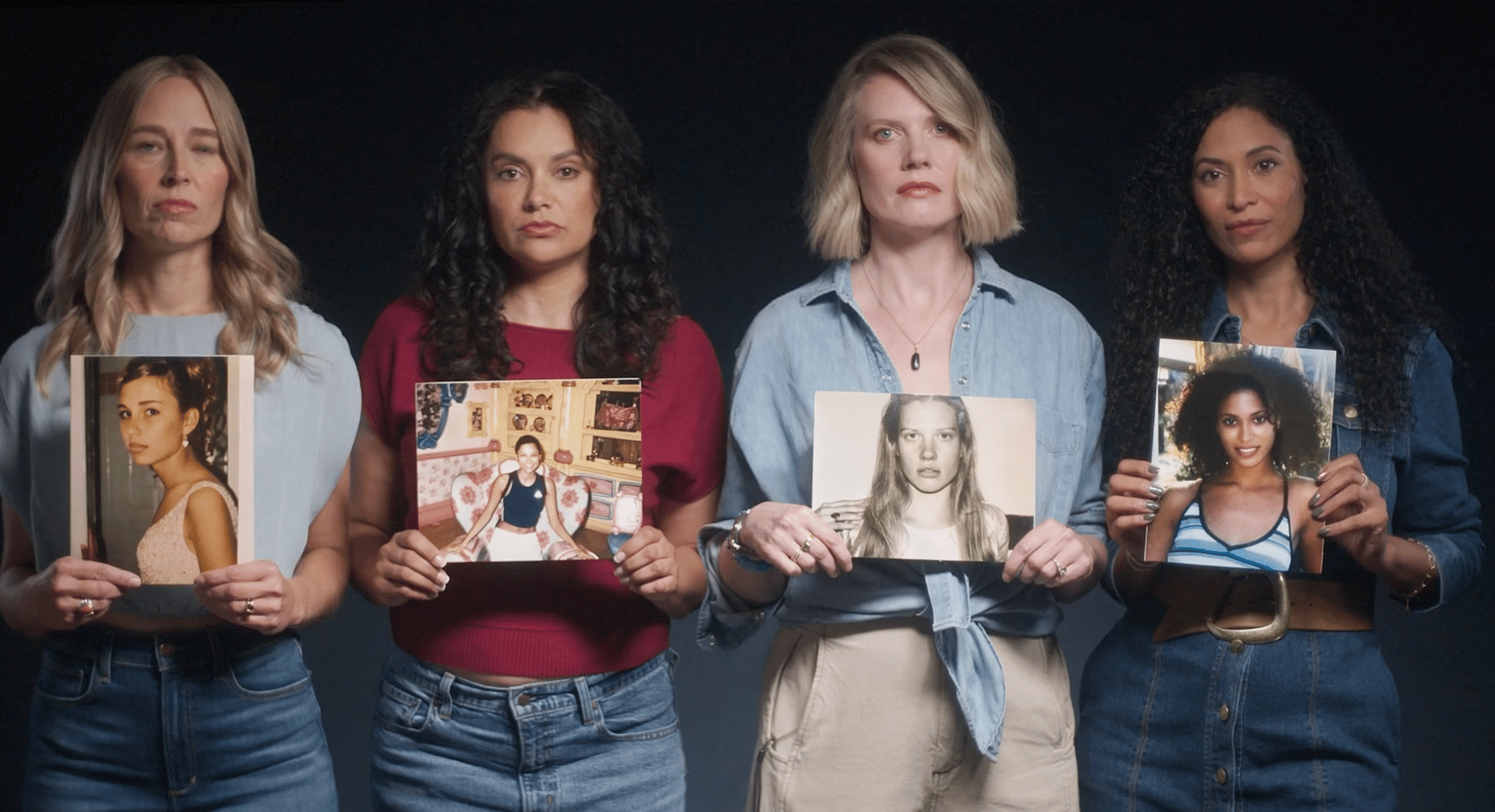
A few days ago, the world marked the International Day for the Elimination of Violence against Women. And that’s also why, in this issue of Debrief, we want to tell the stories of several survivors who spent 30 years fighting one of the most powerful systems in the United States: the one embodied by Jeffrey Epstein.
Last week we looked at the “geopolitical side” of Epstein and at the investigations that describe him as the hub of a system connecting money, power, and foreign intelligence services. But to keep that system running, Epstein didn’t just need the millions of dollars from his billionaire friends — he also needed to abuse underage girls and enable others to abuse them.
In this issue, we’re talking about him again, but from a completely different angle: not Epstein as a middleman in the power games between states, but Epstein as seen by the survivors who tried to stop him and have him arrested.
This issue is written by Sacha and edited by Luigi.
In questo numero di Debrief:
Before #MeToo: Maria, Alicia, and the silence on the other end of the line
The official story of Epstein — the one we’re used to hearing — usually begins in 2005 with the Palm Beach police investigation. But the first women who tried to stop him had sounded the alarm almost ten years earlier.
In August 1996, Maria Farmer was 25, studying art, and had worked for Epstein. She says she was assaulted by Epstein and Ghislaine Maxwell, and that she knew he had also abused her younger sister, who was 16 at the time. Farmer did exactly what people are always told to do in these cases: she went to the New York Police Department, and then, following their instructions, she called the FBI.
According to her account, the call with the FBI lasted only seconds — they hung up on her mid-sentence. Nobody called her back, and no investigation followed her report. Her complaint — the earliest known accusation against Epstein — disappeared into a bureaucratic black hole.
A year later, in 1997, another woman tried to do the same thing on the opposite coast of the United States. Alicia Arden was a model. Epstein lured her into a Santa Monica hotel room under the pretense of a Victoria’s Secret audition. There, she says, he groped and assaulted her. She resisted, escaped, and did what should have been the obvious next step: she went to the police, filed a detailed report, and asked for his arrest.
What happened next is a script many women know far too well: the police never forwarded the case to prosecutors. Years later, some officers would claim that Arden “didn’t want to proceed,” but she has always insisted this is false — that she went back to the station precisely to insist they take the report seriously.
The outcome, however, was identical to Maria Farmer’s: no criminal case ever came out of that complaint. Arden today openly calls it a “missed opportunity”: if they had listened to her then, she says, “so many girls could have been protected.”
In those same years, inside Epstein’s private orbit, a very simple message was repeated to the girls trapped around him:
“You can’t escape. You can’t tell anyone. We own the police. Nothing will ever happen to us.”
Given what we know now, it wasn’t just a psychological threat. It was almost a statement of fact.
Palm Beach: A 14-Year-Old Reports Her Allegations and Justice Turns Her into a "Prostitute"
Per arrivare al primo vero fascicolo contro Epstein bisogna aspettare il 2005.
The first real case against Epstein came in 2005.
In Palm Beach, Florida, the parents of a 14-year-old girl went to the police: their daughter had been paid to go to Epstein's mansion to give him a "massage," and there he molested her. A long, serious investigation began, led by Police Chief Michael Reiter and Detective Joseph Recarey.
Within a few months, investigators gathered testimonies from dozens of girls, many minors, documenting a system in which teenagers (13–16 years old) were recruited by other girls, brought to Epstein's home, and paid in cash. They realized that this was not "an isolated case," but a serial pattern of sexual exploitation.
The investigation appears to be working; very serious crimes are being uncovered, and everything seems to be pointing toward an indictment. Then the case was handed over to the local prosecutor's office, led by State Attorney Barry Krischer, and something happened that would forever scar the survivors of these abuses.
In July 2006, the county grand jury indicted Epstein on a single charge: "solicitation of prostitution," based on the testimony of a single girl. This meant a fourteen-year-old girl who reported a rape was treated by the US justice system as an underage prostitute, not as a victim of sexual abuse. All other testimonies gathered by the police, and the character of a serial predator, disappeared from the criminal record.
The furious police chief wrote an official letter accusing the prosecutor's office of ignoring Epstein's "total criminal conduct." The tension was such that the Palm Beach police did something extremely rare: they bypassed the local prosecutor and took the case directly to the FBI.
If it's possible to influence or circumvent a small prosecutor's office, with federal agents on this case, everything should be different. It seems like the moment when, finally, someone can stop Epstein. Instead, this is where the story becomes even more complicated.
The “deal of a lifetime”: the secret agreement made behind the victims’ backs
When the case reaches the FBI, a massive federal investigation begins — codename Operation Leap Year. Agents identify at least 34 confirmed underage victims.
A federal prosecutor, Ann Marie Villafaña, drafts a 60-count indictment for child-sex offenses — a charging document that, if filed, could have sent Epstein to prison for the rest of his life.
And this is where the part of the story begins that, years later, a federal appeals court would describe as “beyond scandalous — a national disgrace.” Epstein unleashes a team of heavyweight attorneys: Alan Dershowitz, former special counsel Kenneth Starr, and several other high-powered lawyers. Instead of negotiating with the prosecutor actually handling the case, they go straight to the top: Alexander Acosta, the U.S. Attorney for the Southern District of Florida.
From that moment on, two things happen in parallel. To the victims, Acosta’s office says the federal investigation is “ongoing” — that they should be patient, that these things take time. Behind the scenes, however, Acosta’s team is secretly negotiating a deal with Epstein’s lawyers.
In September 2007, they sign a Non-Prosecution Agreement (NPA) that, read today, feels almost like a legal fantasy. Epstein agrees to plead guilty only to two state charges in Florida (soliciting and procuring a minor for prostitution). In exchange, the federal government promises not to prosecute Epstein — or any of his co-conspirators — for any federal crimes connected to the case.
The agreement is placed under seal: the victims are never informed, no federal judge reviews it, and the FBI investigation is effectively shut down. All of this happens in open violation of the Crime Victims’ Rights Act (CVRA), which guarantees victims the right to be notified and consulted before any plea deal. The state plea hearing in Florida is scheduled with such little notice that none of the victims are able to appear in court to object.
On June 30, 2008, Epstein walks into a Florida courtroom, far from national attention. None of the dozens of girls he abused are in the room. He pleads guilty to the two state counts. The sentence: 18 months in county jail, a year of community control (house arrest), and mandatory sex-offender registration.
On paper, it’s already a shockingly light sentence for such serious crimes. In reality, it’s even lighter: thanks to “good behavior” credits, Epstein walks out after just 13 months. And those 13 months hardly resemble incarceration: 12 hours a day, 6 days a week, he is allowed to leave jail to work from an office he set up in West Palm Beach, chauffeured by his private driver. The “work release” program used to justify this — in theory — should not be available to sex offenders.
When he finally leaves custody for good in 2009, Epstein is free to resume flying between Florida, New York, the Caribbean, and Paris. Formally, he is a registered sex offender.
He has just secured the deal of a lifetime.
The survivors who sue the State
The least told part of this story is what the survivors did after Epstein’s plea deal.
On July 7, 2008, just a few days after his conviction, one of them (identified as Jane Doe) filed an emergency petition in federal court. She accused the Department of Justice of violating the CVRA, the Crime Victims’ Rights Act, by signing the agreement without consulting the victims.
Over time, more young women joined the case. The proceedings lasted more than ten years. Internal emails from Acosta’s office reveal a clear pattern: officials writing to Epstein’s lawyers asking them not to inform the victims, memos discussing how to “keep the girls out” of the courtroom, and updates sent to victims describing the case as “ongoing” even though everything had already been decided behind closed doors.
In February 2019, Judge Kenneth Marra sided with the complainants on a crucial point: the government had violated victims’ rights by negotiating and hiding the agreement without involving them. It was a historic victory on a symbolic level.
In practical terms, however, almost nothing happened: the following year, an appeals court overturned Marra’s ruling on a technicality. Once again, we are faced with the paradox: the State violated the law at the expense of the victims, yet no one is held accountable.
Meanwhile, many civil cases against Epstein were settled through confidential agreements. For the system, it was yet another form of control over the girls: it bought the possibility that their stories would never be told, offering money in exchange for silence.
Why it took a journalist
For years after 2008, the FBI kept Epstein’s case file closed. Leads on possible crimes in New York, New Mexico, and the Caribbean sat untouched. The survivors moved on with their lives, convinced that nothing would ever happen again.
What reopened the case was not a new prosecutor, but a journalist: Julie K. Brown of the Miami Herald. In 2018, Brown published a series of articles titled Perversion of Justice. She interviewed several survivors — many of them minors at the time — and reconstructed in detail the secret 2007 plea deal. She showed, with documents in hand, how Acosta’s office had violated the girls’ rights.
The effect was exactly what the FBI and the DOJ had spent years avoiding: the scandal became public, political pressure grew, and the story reached Congress.
In July 2019, the U.S. Attorney’s Office in Manhattan indicted Epstein for sex trafficking of minors in Florida and New York. It was, in essence, the federal case that should have taken place ten years earlier.
When the FBI searched his New York townhouse, they found thousands of photos of nude girls — some of them underage — along with travel records and financial documents showing that the abuse scheme had never really stopped.
Epstein was arrested. A month later, he was found dead in his jail cell, in circumstances over which many doubts have been raised.
The survivors would never have the chance to see him sit on the stand in a real trial.
Until next Debrief,
Luigi and Sacha
If you've come across an undercover investigation you think we should feature, share it with us here:
👉 https://forms.gle/1JbqMBJUfoRU9MBp7
If you have suggestions, questions, tips (or insults), drop us a line at:
👉 [email protected]
If you enjoyed this newsletter, pass it along to your friends using this link:
👉 https://debrief-newsletter.beehiiv.com/
Follow us on Instagram, occasionally we'll upload content different from the newsletter:
👉 https://www.instagram.com/debrief_undercover/
We've also launched a podcast featuring interviews with the authors of memorable undercover investigations:
👉 https://open.spotify.com/show
And if that's still not enough, join our Telegram channel, where we can keep the conversation going:
👉 https://t.me/debrief_undercover
Reply