- Debrief - The undercover dispatch
- Posts
- Undercover inside Auschwitz: the story of clandestine operations against Nazism
Undercover inside Auschwitz: the story of clandestine operations against Nazism
Infiltrations, silences, and extreme choices made by those who saw horror being born and tried to tell it while the world pretended not to see.

Luigi Scarano
30 gennaio 2026
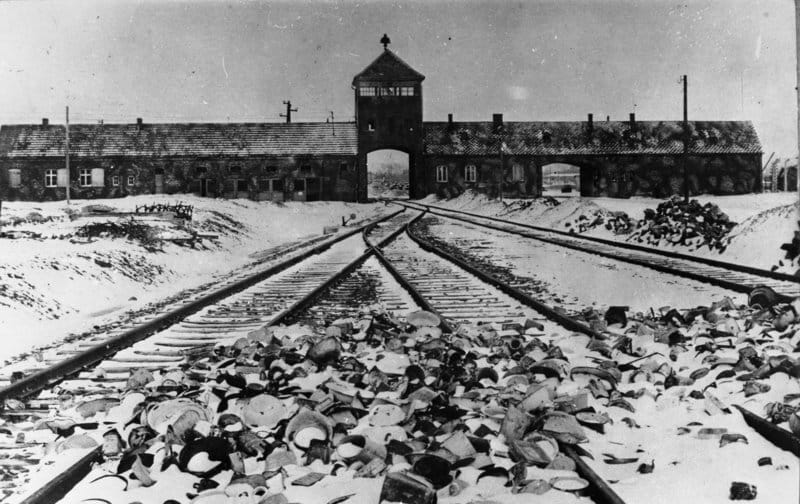
January 27 marked Holocaust Remembrance Day, chosen because it coincides with the liberation of the Auschwitz-Birkenau extermination camp in 1945. And it is precisely the memory of the Holocaust that we will address in this issue of Debrief, because even if they are not widely known, there are extraordinary stories of people who, working undercover, documented the actions of Hitler’s supporters and the perpetrators of the extermination of the Jews.
This issue is written by Luigi and edited by Sacha.
In This Issue of Debrief:
Florence Mendheim: the librarian who infiltrated American Nazis
In the 1930s, Florence Mendheim was a Jewish librarian from the Bronx, New York. But she was also a remarkably brave woman who led a dangerous double life as an undercover agent within the ranks of Nazi sympathizers on American soil. In 1933, as the Nazi movement rose in the United States, American Jewish organizations sought volunteers to monitor pro-Nazi groups. Mendheim, the daughter of German Jewish immigrants with relatives still in Germany, did not hesitate to step forward. By day she catalogued books at the Washington Heights public library; by night she transformed herself, frequenting taverns and beer halls where members of the Friends of New Germany (later reorganized as the German American Bund) gathered, a movement founded by German immigrants in the U.S. and openly pro-Nazi. With no formal training but armed with courage, Mendheim immersed herself in that hostile world because, as an American Jew, she felt the Nazi threat as something deeply personal, something that could reach across the ocean.
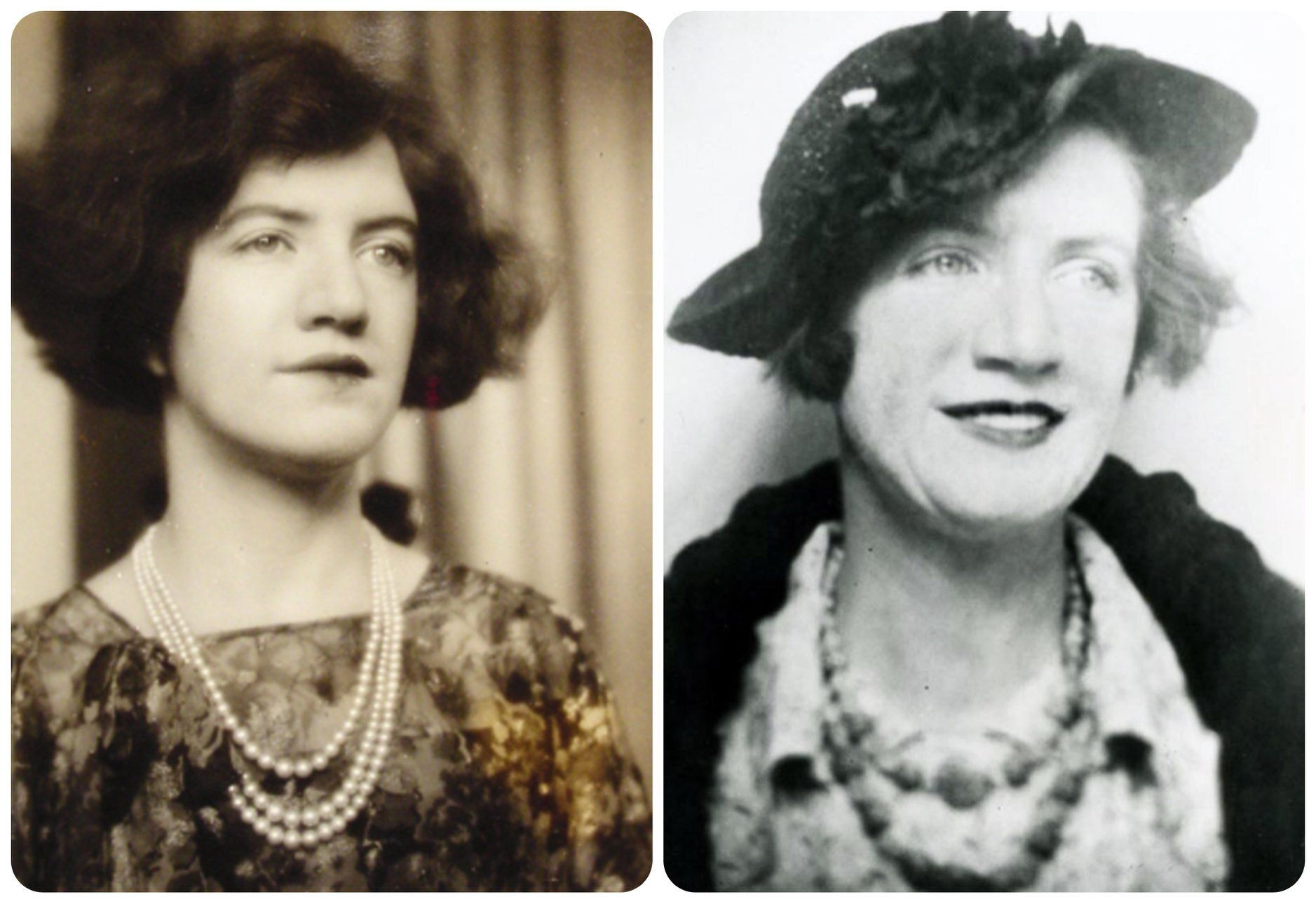
Florence Mendheim
Undercover, Mendheim adopted multiple identities to gather information. In the secret reports she sent to the American Jewish Congress, she signed with the coded initials “K.Q.X.”; in academic circles she used the provocative pseudonym “Anna Hitler” to freely consult texts about the Führer. Among local Nazis, meanwhile, she went by the name “Gertrude Mueller,” building a reputation as a reliable sympathizer. Putting herself directly at risk, she even worked as a secretary in the office of a pro-Nazi group, gaining access to internal information. During meetings, often conducted in German, she transcribed the names of activists, notes on speeches, and flyers steeped in pro-Hitler propaganda and antisemitic slogans. Her reports detailed the organizational structure of groups like the German American Bund, their meeting places, and even the macabre linguistic rituals of members, who were accustomed to greeting each other as a sign of comradeship by saying in German a phrase that translated to “kill the Jew.”
When, at the end of a secret meeting, she was sometimes offered a ride home, Florence would accept, but cleverly never allowed herself to be dropped off at her real home in the Bronx. Instead, she would give a fictitious address in Manhattan, enter the lobby of a building pretending to live there, wait for the car to drive away, and then slip into the subway to return safely to her family. Despite the growing risks, Mendheim’s cover held for years. Toward the end of 1938, as war in Europe drew closer, Florence ended her clandestine activity. The information she had collected (pamphlets, posters, lists of names) was handed over to the American Jewish Congress, which in all likelihood shared it with federal authorities. Indeed, as early as 1938, the U.S. Congress launched hearings into Nazi infiltration in America, and the materials gathered by Mendheim and other volunteers helped shed light on the internal threat. When the United States later entered the war, pro-Nazi groups were swiftly dismantled: the Bund was outlawed and dissolved, and several leaders were arrested or deported, effectively wiping out the movement.
With that chapter over, Florence Mendheim returned to anonymity. She continued working as a librarian, taught evening classes for adults, and even tried her hand at writing thriller novels, whose heroines, unsurprisingly, echoed daring and intrepid female figures. She never married and, in later years, served as secretary of a committee for Jewish-Arab dialogue, advocating for peaceful coexistence in Palestine.
Witold Pilecki: the man who voluntarily entered Auschwitz
Witold Pilecki was a cavalry officer in the Polish army and during the Second World War carried out one of the boldest clandestine missions ever undertaken: he deliberately allowed himself to be imprisoned in Auschwitz in order to gather evidence of the horrors unfolding there and to organize an internal resistance movement. Born in 1901 into a Polish noble family, at the time of the German invasion in 1939 Pilecki had a wife and two children and lived a comfortable rural life. When Poland was invaded and occupied by the Nazis (in the west) and the Soviets (in the east), he joined the Polish clandestine resistance. In 1940, confronted with the terrible news of Nazi persecutions, he conceived a daring plan: to infiltrate the new concentration camp established by the Germans at Auschwitz by posing as an ordinary prisoner. Thus, on September 19, 1940, he deliberately got himself arrested during a Gestapo roundup in Warsaw, ensuring that two days later he would be included in the convoy of deportees headed for the camp.
As soon as he passed through the gates of Auschwitz, Pilecki realized that reality exceeded his worst nightmares. Upon disembarking from the sealed freight train, he and the other prisoners were beaten with clubs by the SS. The Germans immediately killed about ten of them at random as a warning. Everyone was stripped of their belongings, shaved, and marked with a number. Pilecki became prisoner 4859. Thus began for him a two-and-a-half-year ordeal in Hell. Daily life in the camp meant constant hunger, exhausting labor, arbitrary abuse, and disease. Emaciated prisoners were tormented by lice and bedbugs; typhus epidemics decimated the inmate population. Prisoners themselves, reduced to desperation, sometimes stole each other’s crusts of bread or, in despair, threw themselves against the high-voltage barbed wire to end it all. And yet, in that infernal setting, Pilecki did not forget his mission. From the very first months he began secretly contacting other inmates, especially former soldiers or members of the resistance he had known from the outside, to create a clandestine nucleus of internal opposition.
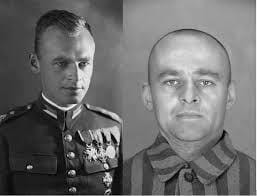
Witold Pilecki
Over time the network grew: at first there were only a few, but by the end of 1942 Pilecki’s “secret army” numbered nearly a thousand members inside the лагер. Incredibly, despite torture, spies, and hunger, the group remained cohesive: none of the conspirators betrayed the others, apart from a single incident involving a Gestapo infiltrator who was discovered and neutralized. Through this clandestine organization, Pilecki and his men sought to ease the suffering of their fellow prisoners: through small thefts they distributed extra food and warm clothing to those most in need, sabotaged Nazi plans where possible, hid the sick who were at risk of execution, and spread secret news from the outside world to keep morale up.
At the same time, Pilecki began sending messages to the outside to inform the Polish Resistance command, and thus the Allies, of what was happening at Auschwitz. As early as October 1940, his group managed to get out the first detailed report on conditions in the camp. In the message, Pilecki implored the Allies to bomb Auschwitz and put an end to that horror, even at the cost of killing himself and all the prisoners, because that would still have been a more merciful death than what they were enduring. This did not happen, but after this first message, Pilecki continued to leak increasingly alarming reports to the outside, as the Nazi “Final Solution” took shape.
As the months passed, it became clear to the captain that no external help would arrive and that any internal uprising would be collective suicide without military support from outside. Thus he reached an almost unthinkable decision: to attempt an escape from Auschwitz so that he could personally inform the Resistance and the Allies. In the early hours of April 27, 1943, taking advantage of a night assignment at the camp bakery near the perimeter, he managed to evade surveillance together with two fellow inmates. After cutting the telephone line and forcing a secondary door, the three escaped under the noses of the guard towers, then fled into the surrounding woods before the alarm was raised. Through countless ordeals, Pilecki reached Warsaw, where he was able to briefly reunite with his family after years.
When the Third Reich fell in May 1945, Pilecki remained faithful to the ideal of a free Poland, becoming an opponent of the Soviet regime. In 1947, Pilecki was arrested by the Stalinist secret police on the pretext of espionage and plotting attacks. The following year he was subjected to a sham trial behind closed doors: the regime’s court sentenced him to death as a “traitor to the homeland.” On May 25, 1948, Witold Pilecki was executed with a shot to the back of the head in a Warsaw prison. For decades, under the communist regime, Pilecki’s children were taught at school that their father was a traitor, and even remembering him at home was dangerous. Only after the collapse of communism, in 1989, could the truth emerge. His original reports on Auschwitz, buried in archives for half a century, came to light again in the 1990s.
Until the next Debrief,
Sacha and Luigi
If you've come across an undercover investigation you think we should feature, share it with us here:
👉 https://forms.gle/1JbqMBJUfoRU9MBp7
If you have suggestions, questions, tips (or insults), drop us a line at:
👉 [email protected]
If you enjoyed this newsletter, pass it along to your friends using this link:
👉 https://debrief-newsletter.beehiiv.com/
Follow us on Instagram, occasionally we'll upload content different from the newsletter:
👉 https://www.instagram.com/debrief_undercover/
We've also launched a podcast featuring interviews with the authors of memorable undercover investigations:
👉 https://open.spotify.com/show
And if that's still not enough, join our Telegram channel, where we can keep the conversation going:
👉 https://t.me/debrief_undercover
Reply